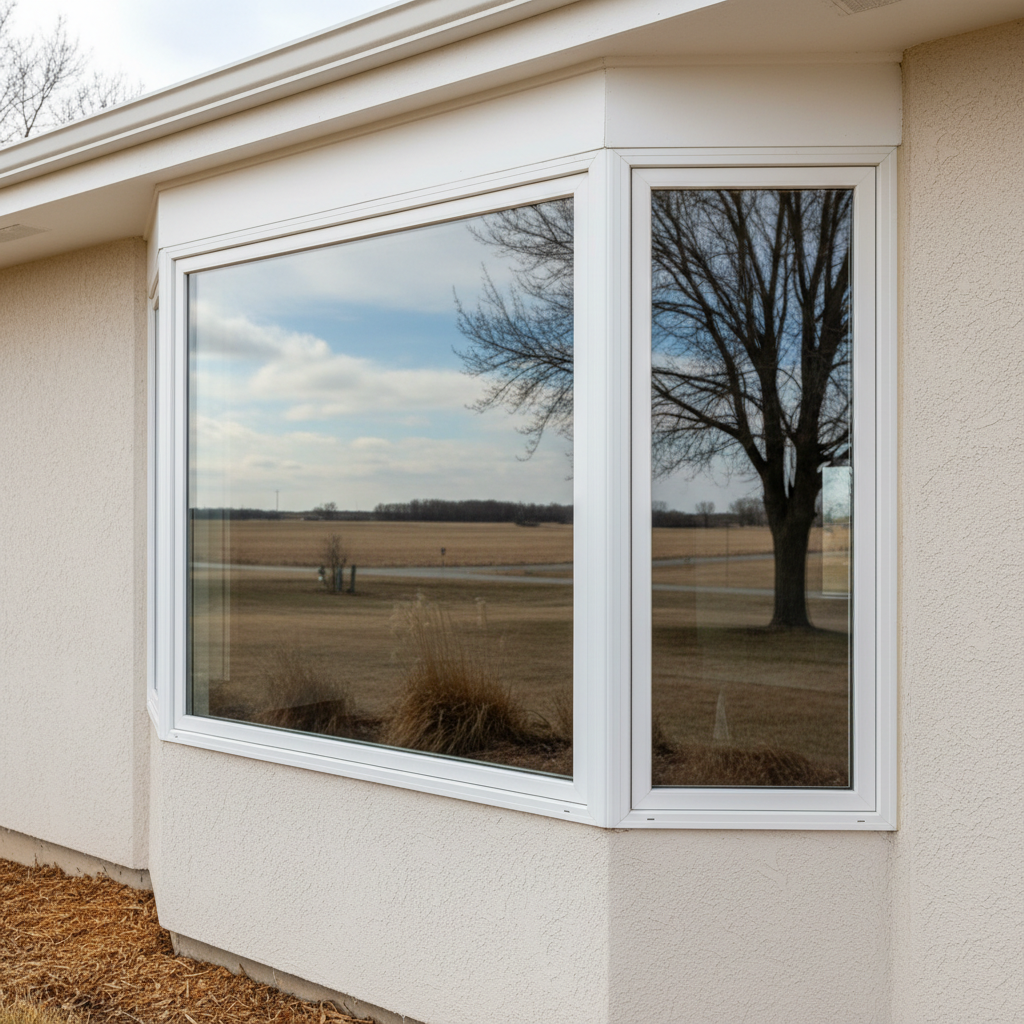
Alright, let's talk bay windows. I get a lot of questions about these, and it's no wonder. They really change the look and feel of a house, inside and out. But because they're a bit more involved than a standard window replacement, folks tend to have more on their minds. I've been doing this for years here in Great Bend, and I've seen just about every scenario, believe me. So, I've put together answers to the most frequent questions I hear. No marketing speak, just honest talk from someone who's on the job site every day.
What's the real difference between a bay and a bow window?
This is probably the most common question, and it's a good one because people often use the terms interchangeably. They're both projection windows, meaning they extend out from your house's exterior wall, creating more interior space and letting in more light. But they look and function differently.
- Bay windows typically have three openings. The center window is usually a large picture window, and the two side windows are often smaller, angled at 30, 45, or 90 degrees. These side windows can be casements or double-hungs, which is great for ventilation. They usually have a more angular, defined projection.
- Bow windows, on the other hand, usually have four, five, or even six windows that are all the same size and arranged in a gentle, graceful curve. Think of it like the bow of a ship. They don't project as sharply as a bay, giving a more subtle, rounded look. They tend to let in a bit more light because of the wider arc, but don't create as much usable interior space as a bay might.
For most homes around here, especially those built in the 70s and 80s in neighborhoods like the one near Veterans Memorial Park, a bay window often fits the existing architecture a bit more naturally if you're replacing an old flat window. A bow window can be a beautiful addition, but sometimes requires a bit more structural work to support that wider curve, you know?
Do I need a special foundation or support for a bay window?
Absolutely, yes. This isn't just slapping a window in a hole. Because a bay window projects out from your home, it needs proper support underneath. You can't just rely on the wall studs. Usually, we're talking about either a cantilevered support system, which means extending the floor joists, or building out a strong structural frame that ties into the house's existing framing. Sometimes, if the projection is significant, or if the house structure isn't ideal, we might even need to pour a small concrete footing or build a knee wall underneath. It all depends on the bay's size, the windows' weight, and your home's construction. This is a critical step that you don't want to cut corners on, otherwise, you'll end up with a sagging window and potential water intrusion down the line.
How long does a bay window installation usually take?
For a standard bay window installation, replacing an existing flat window, you're usually looking at one to two days. That's for the actual installation of the unit, flashing, exterior trim, and interior finishing. Now, if we're cutting a new opening in a wall where there wasn't a window before, or if there's significant structural work needed, like building out a new support system from scratch, then it could easily stretch to three or four days, sometimes more. Weather, especially our unpredictable Great Bend winds, can also play a role. We always aim to get it done efficiently, but never at the expense of doing it right.
Will a bay window increase my energy bills?
This is a common concern, and it's a valid one. More glass area can sometimes mean more heat transfer. However, modern bay windows are incredibly energy-efficient. We're talking about insulated glass units, often with low-emissivity (Low-E) coatings, and sometimes even argon gas fills between the panes. The frames themselves are also designed to minimize heat transfer. So, while you're adding more glass, you're also adding highly efficient glass. In many cases, especially if you're replacing an old, drafty flat window, a new bay window from Guardian Window Installation can actually improve your home's overall energy performance. You'll gain light and space without necessarily cranking up your AC in the summer or your furnace in the winter.
Can I put a bay window anywhere on my house?
Not exactly. While they look great and add curb appeal, there are some practical limitations. First, you need enough exterior clearance. Remember, it projects out from the wall. You don't want it bumping into shrubs, trees, or a neighbor's fence. Second, consider the interior space. You need room for the window to project inward without obstructing walkways or furniture. Third, and most importantly, it needs to be on a wall that can support it structurally. You can't just cut a hole in any wall. Load-bearing walls require careful planning and often additional header support. We always do a thorough assessment of your home's structure before recommending placement.
What kind of maintenance does a bay window require?
Honestly, not much more than any other quality window, but there are a few things to keep in mind. You'll want to clean the glass regularly, inside and out, just like your other windows. Pay attention to the exterior caulk and sealants around the frame where it meets your house. Our Kansas weather, with its extreme temperature swings and strong sun, can be tough on sealants over time. Check them annually for cracks or deterioration and re-caulk as needed. If your bay has operable side windows, make sure the hardware and tracks are clean and lubricated so they open and close smoothly. Beyond that, it's pretty standard stuff. Good quality windows are built to last with minimal fuss.
Will a bay window add value to my home?
In my experience, yes, a well-installed bay window almost always adds value. It's not just about the aesthetic appeal, though that's a big part of it. Bay windows increase natural light, which is a huge selling point. They also create a sense of more interior space, even if it's just a small nook for reading or displaying plants. This added functionality and perceived space can be very attractive to potential buyers. Plus, if you're replacing an older, less efficient window, you're also improving the home's energy efficiency, which is another value-add. It's an investment that typically pays off, both in your enjoyment of your home and its market value.