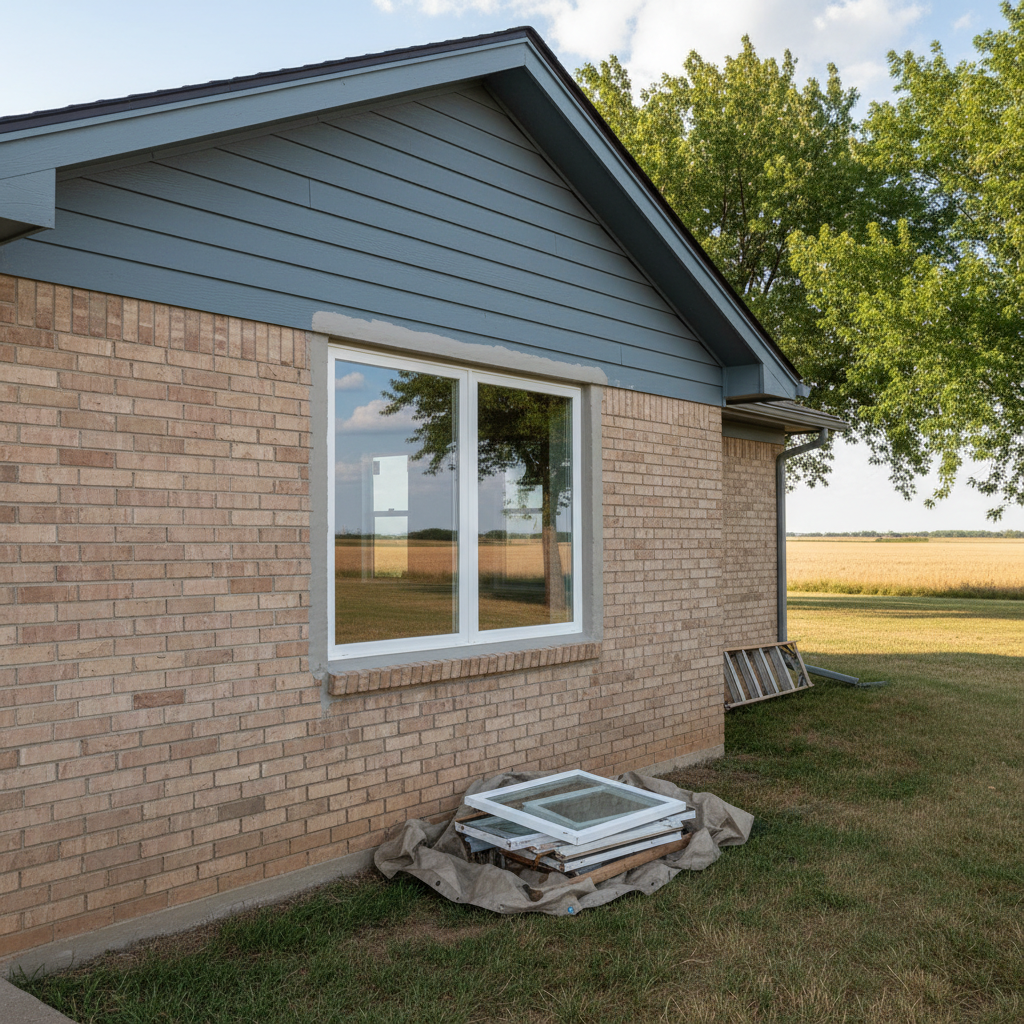
So, you've got a window problem. Maybe it's a cracked pane, or a double-pane unit that's all foggy, or maybe the sash just won't stay up. Whatever it is, your first thought is probably, "How much is this going to cost me?" That's a fair question. And as someone who's been fixing windows around Great Bend for years, I can tell you there's a pretty wide range. But it's not just a guess; there are real factors that make the price what it is.
What Really Drives Window Repair Prices?
A few things really decide the final bill. It's not just about the window's size, though that definitely plays a part.
- The Damage Type: A simple broken pane of single-pane glass? That's usually the cheapest fix. We're just replacing the glass, plain and simple. If it's a double-pane unit that's fogged up, that's a different story entirely. You can't just clean the fog away; the seal has failed, meaning the whole insulated glass unit (IGU) needs to be replaced. Frame damage, hardware issues (like balances or cranks), or rot in a wood window are often much more involved, sadly.
- Window Material and Style: Vinyl windows are generally easier and cheaper to repair than wood or aluminum, especially if it's a standard size. Casement windows with their crank mechanisms can be trickier than a simple single-hung. Historic homes, like some of those beautiful old places near Brit Spaugh Park, often have unique window styles or custom wood frames that need more specialized work and materials.
- Glass Type: Standard clear glass is one thing. If you've got tempered safety glass (common in bathrooms or near doors), obscure glass for privacy, or low-emissivity (Low-E) glass for energy efficiency, the material cost goes up, naturally.
- Accessibility: Is the window on the first floor facing the street, or is it a second-story window perched above a tricky landscaping feature? The harder it is to get to, the more time and specialized equipment might be needed. And that, of course, adds to labor costs.
- Emergency vs. Scheduled Repair: If you need someone out there yesterday because of a security issue or a gaping hole in your living room, you might pay a bit extra for that immediate service. Planned repairs are almost always more economical, no surprise there.
Typical Repair Cost Ranges in Great Bend
Look, I can't give you an exact number without seeing the window myself, but I can give you some realistic ranges for common repairs I see around town.
- Single Pane Glass Replacement: For a standard-sized window (say, 24x36 inches), you're usually looking at anywhere from $150 to $250. This includes the glass, getting the old glass out, and putting the new one in. If it's a bigger pane, it'll be a bit more.
- Insulated Glass Unit (IGU) Replacement (Foggy or Cracked Double-Pane): This is one of the most common repairs we do. For an average-sized double-pane window (e.g., 30x50 inches), expect to pay between $300 and $550. This covers making a new custom-sized IGU and installing it. Larger or specialty glass (Low-E, tempered) will be on the higher end of that range, or even a bit more.
- Hardware Repair (Balances, Cranks, Locks): If it's just a broken balance in a double-hung window, you might pay $100 to $200, including parts and labor. A casement window crank can be $150 to $300, depending on the specific part needed and how much work it is to get to it.
- Minor Frame Repair (Wood Rot, Sealant Issues): For small sections of wood rot that we can cut out and patch, or re-caulking a leaky frame, you're probably looking at $150 to $400. Extensive rot usually means you're better off replacing the whole window, honestly.
These are just averages, mind you. A very small, simple job might be less, and a very complex one could push past these numbers. But it gives you a good starting point.
What Should a Quote Include?
When you get a quote from me or any other reputable outfit, it should be clear as day. Here’s what you want to see:
- Detailed Description of Work: Exactly what's being repaired or replaced.